
Family wealth succession planning
Unsure where to start with wealth succession planning for your family? Our expert wealth planners suggest asking yourself these four important questions.
Quick summary: How family succession planning could help protect your family’s future
Canaccord Wealth’s expert Wealth Planners believe that wealth succession planning should be a key discussion point and incorporated into your financial plans as early as possible. However, it’s true that money can be one of the most awkward topics for many families to discuss. Happily this attitude seems to be changing. The right approach involves asking what is succession planning alongside some other important questions.
• Why should I talk to my family about handing down my wealth?
Talking to your family about handing down wealth helps avoid confusion, reduces tax burden and ensures your wishes are clearly understood and followed.
• When is the best time to transfer my wealth?
The best time to transfer your wealth is either during your lifetime, when it may be more tax-efficient and personally rewarding, or through a regularly updated Will that reflects your goals and legal requirements.
• How much wealth should I pass on?
How much wealth you should pass on depends on your financial situation. Cashflow stress testing can help you gift confidently without risking your future security.
• Who should I pass my wealth on to?
Who you pass your wealth to is personal: family, trusts for grandchildren, or charities. A tailored approach ensures long-term impact and protection.
• How should I exactly transfer my wealth?
You can transfer wealth through lifetime gifts or a Will. Timing, affordability and whether to use trusts will guide the best approach.
Family wealth transfer - it’s time to talk money
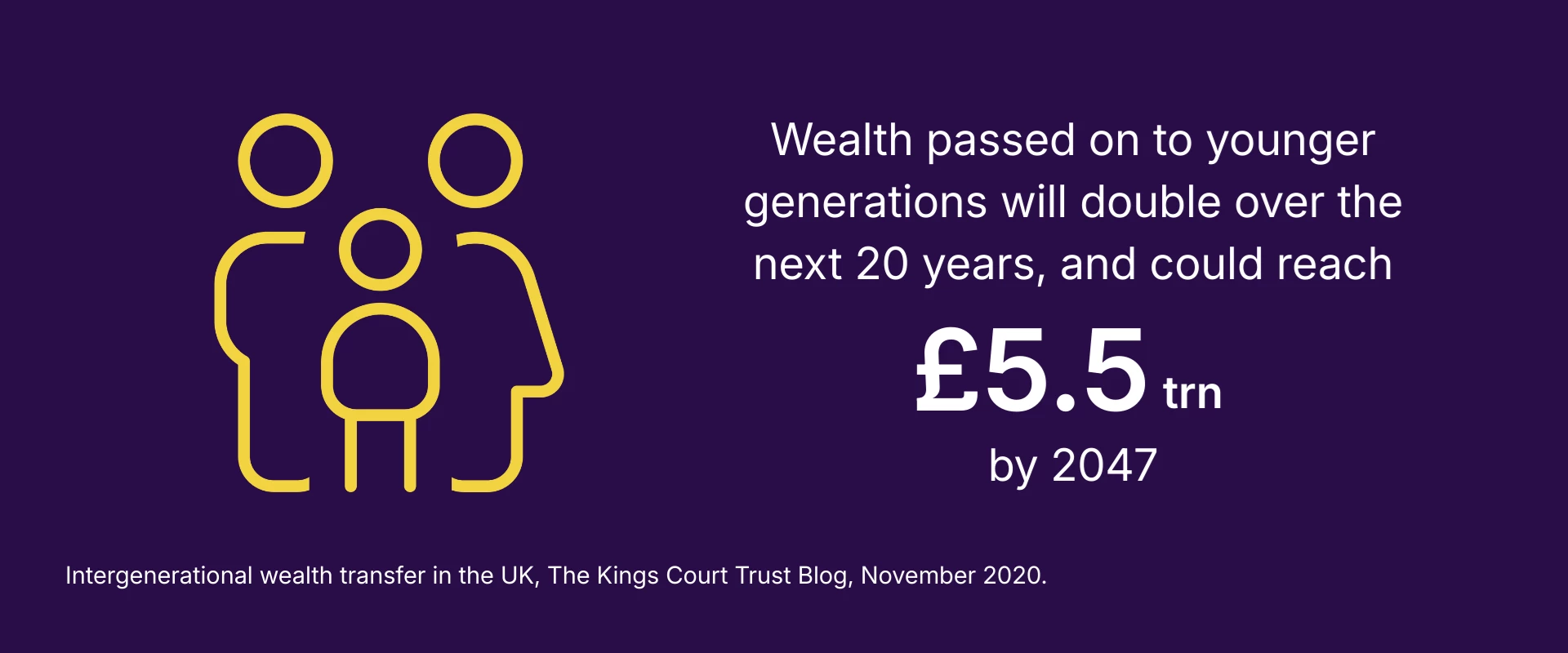
Across the UK, families are working hard to ensure they can leave as much of their estate as possible to their children and grandchildren to ensure their financial stability in the future. In fact, it is believed that the amount of wealth passed on to younger generations could double over the next 20 years, possibly reaching as much as £5.5trn by 2047¹.
Furthermore, a staggering £15bn inheritance is waiting unclaimed because people haven’t told their beneficiaries where their money is kept².
However, before you start discussing things with your loved ones, consider these four key questions, all of which are interlinked:
- When do you want to transfer your wealth?
- How much wealth do you want to pass on?
- Who do you want to pass your wealth on to?
- How do you want to transfer your wealth?
Let’s look briefly at each question in turn.
1. When do you want to transfer your wealth?
This isn’t simply a question of leaving money in your Will. There’s other ways of transferring assets during your lifetime, which may have a range of advantages.
Nevertheless, effective wealth succession planning starts with ensuring that your Will is kept up to date, to reflect your personal circumstances and objectives. It should also reflect the latest legal thinking in the jurisdictions where you hold assets.
We suggest that you take professional legal advice, and we generally suggest that you review your Will every two to three years or whenever there is a major change in your or your family circumstances – such as marriage, divorce or the birth of a child or grandchild. For example, in England and Wales marriage revokes any existing Will, unless the Will was made in contemplation of the marriage.
We also suggest that you consider linking the value of any legacies to inflation, to ensure they maintain their ‘real’ value.
The main advantage of using your Will to transfer wealth is that you won’t compromise your own standard of living. On the other side of the coin, making gifts during your lifetime allows you to experience the joy of seeing your chosen beneficiaries benefiting from your funds. What’s more, if you are exposed to UK taxes, acting sooner rather than later can also be a more tax-efficient way to pass on your wealth to your loved ones.
While everyone’s priorities are different, it’s important to strike the right balance between sharing your wealth with your family and keeping enough to maintain your standard of living and make the most of life now and in the future. The last few years have been a jolt to us all, reminding us to expect the unexpected.
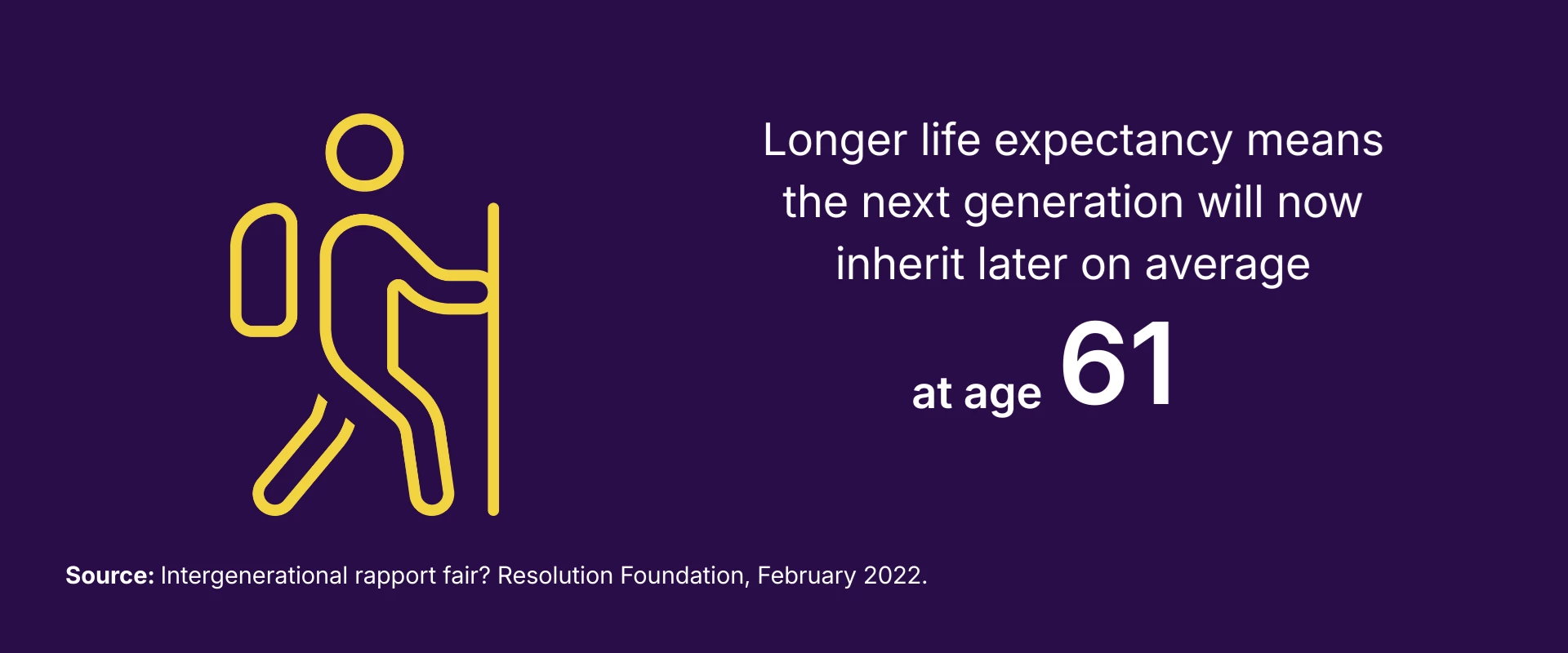
From a wealth planning perspective, in our view this means looking at various scenarios, and financially ‘stress testing’ the outcomes as part of cashflow planning. This includes, for example, testing against various investment return outcomes as well as inflation projections and potential long-term care costs.
2. How much wealth do you want to pass on?
Where larger gifts are being considered, this cashflow ‘stress testing’ can help you to make informed decisions by showing how much you can afford to give away during your lifetime, within a set range that allows for the worst and best case scenarios. This approach recognises that no one can accurately predict the future. After all, a year ago who was predicting double digit inflation in major economies?
3. Who do you want to pass your wealth on to?
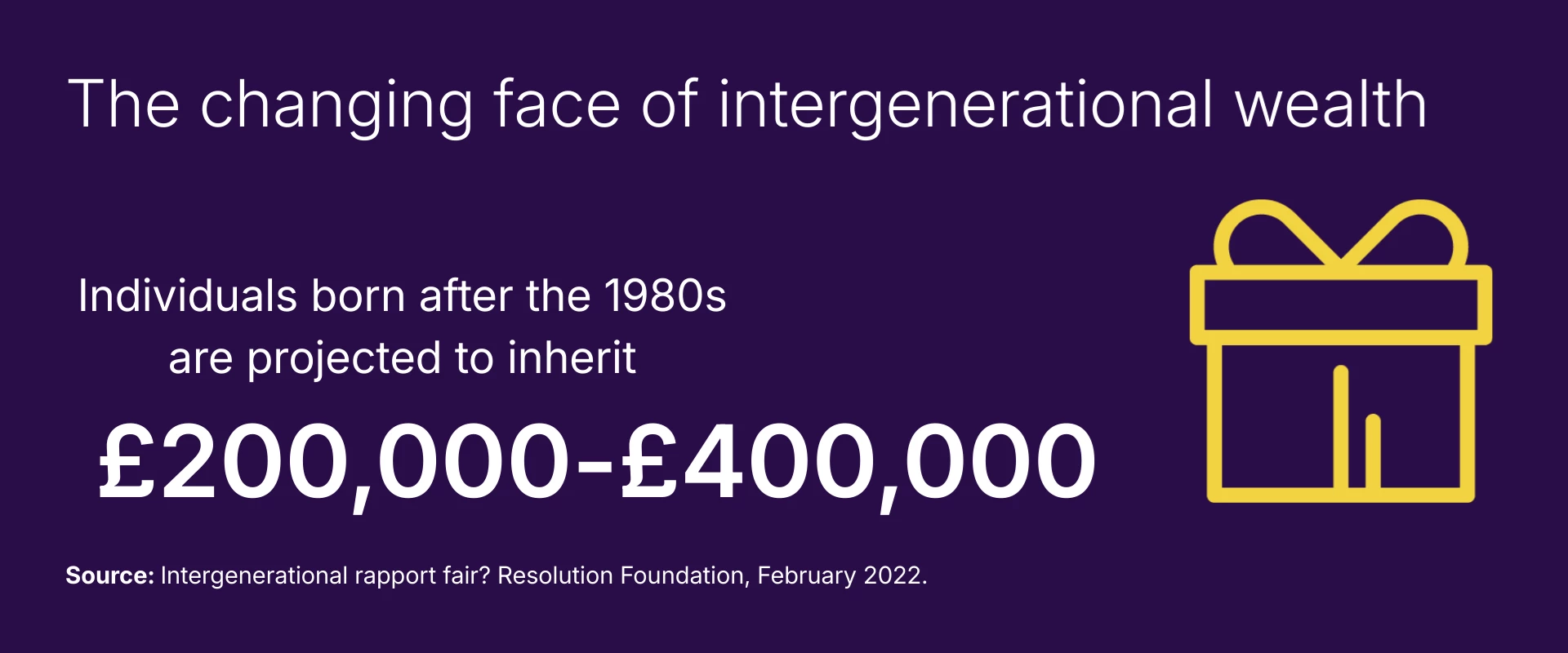
This may be the easiest question to answer and is usually a very personal decision, often linked to the decision about timing. For example, if you have young grandchildren and your main priority is their long-term wellbeing, a trust structure might be an appropriate way forward; this could help with private education costs, university expenses or future property purchases.
Your trustees could have discretion over how much to distribute to the beneficiaries, when and to whom, within the terms of the trust deed. You could also keep some control by being a trustee yourself. This could be particularly relevant where one of your beneficiaries has special needs, as it can be designed to protect their long-term interests.
You might also like to consider benefiting charities close to your heart.
4. How do you want to transfer your wealth?
By following steps one to three, the ‘How?’ may well become clear. Timing plays a big part in this decision, as well as considerations around whether you can really afford to gift during your lifetime. If you can, you then need to decide whether to make absolute transfers or create a trust structure which, while adding complexity, may be the most effective way to achieve your objectives.
Talk to a wealth succession planning expert
Above all, it’s vital to start having conversations about the future with your loved ones. It’s also important to get the right balance between having enough capital and income to enjoy now, while passing on wealth to your family efficiently if you wish to do so.
Our wealth planning experts specialise in family succession planning and can advise all generations of your family, creating a joined-up approach that benefits everyone, working with existing legal or tax advisers where appropriate.
Need more help?
Whatever your needs, we can help by putting you in contact with the best expert to suit you.


